

Books for your life.
New Releases
Brand new books to read. Check out our latest titles or shop the catalog.
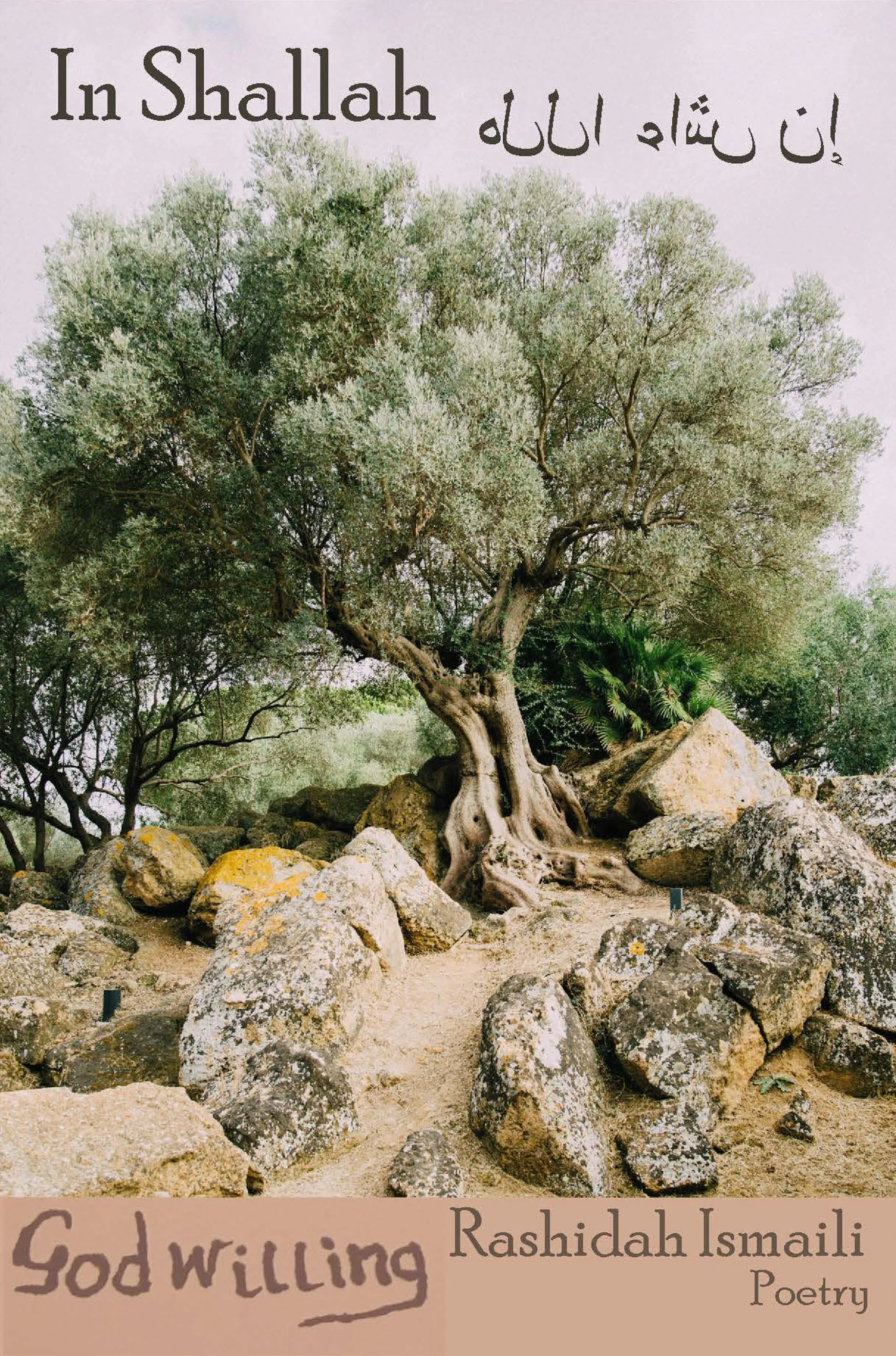
Publication Date: October 31, 2026
Paperback, 114 pages
ISBN: 978-1-966677-62-8
Coinciding with the 25th anniversary of the 9/11 attacks, In Shallah by poet Rashidah Ismaili captures the Muslim response to those events and their aftermath, a volume filled with grief and despair taking the reader on a journey of family and community displacement as a metaphor for that response, reflecting the continuing loss – fueled by prejudice and misunderstanding – to a community still struggling to recover itself.
Praise for Rashidah Ismaili & In Shallah
Rashidah Ismaili – novelist, professor, activist, and founder of Salon d’Afrique – in this searing collection In Shallah brings the lives of uprooted refugees drifting from snow to sea, widows waiting endlessly at windows, grandmothers carrying the memories of an olive tree severed from its land. Clear-eyed and luminous, Ismaili transforms a lifetime of listening into fierce acts of witness – to exile, cruelty and love. In Shallah – “In God’s Time / God Willing” – offers a window into a tragic episode and the consequences still felt a quarter of a century afterwards.
—Dr. Hisham Aidi, political scientist & author
“Poems cannot comfort the dying” writes Rashidah Ismaili in her collection, In Shallah. And yet, ironically, her words aspire to do just that. “Each tooth” she says,
“break forth to test the teats of a yielding mother.” These poems inexorably track the connectivity of life, generation to generation, practice by practice, noting how in the midst of suffering, knowledge grows and is passed on. It’s how we thwart the dying, how somehow, life continues.
In language often sacred and profound, clear and distilled, this poet reminds us that poetry is a tool, an art trying to find a way “to say, to gather colours to paint the smell of dismembered death.” Her poems compress time – “Yesterday is today,” she writes. In narrow verses, she presents trauma and wonder in the same voice, lets us journey her ancient land, feel “the stones under the soles, stop with her at a house of stone and dirt floors” She describes hunger as “the music of missed meals.”
Years ago I heard Ismaili read “The Shaming of an Olive Tree,” the final poem in this book. I was stunned then by the beauty of lines, by the connection of words to deed and outcome. I am stilled now, seeing for myself how her words move across the page. And I feel compelled to return to one of her earlier observations. “I watch the sinews of hand / hands that held my father’s oud.” She brings the same acute power to witness the ugliness and beauty of the world.
—Mervyn Taylor, author of Unpainted Houses
About the Author
Rashidah Ismaili is an academic and writer. Her works have been widely anthologised, recently included in New Daughters of Africa (ed. Margaret Busby). Her novel in linked stories Autobiography of the Lower East Side has been well received, and the second volume in the trilogy of An African Woman in New York (of which the autobiography is the first) is due out late Spring 2027. It is titled Turmoil of Truth.
Ismaili was a member of Umbra, a group of mostly African-American writers and visual artists active in the Sixties on the Lower East Side of New York City. Umbra was short lived but was a forerunner of the Black Arts Movement. She is a founding member of OWWA, Organisation of Women Writers of Africa, created in the late 1980s, and the vice president of Pen & Brush, an all women’s organisation of writers, visual artists, and at one time musicians. It is the oldest such organisation in the country.
She is the founder and hostess of Salon d’Afrique, where intellectuals, artists and writers hold salons to exchange the ideas and critique literary and cultural of modern creators and works.
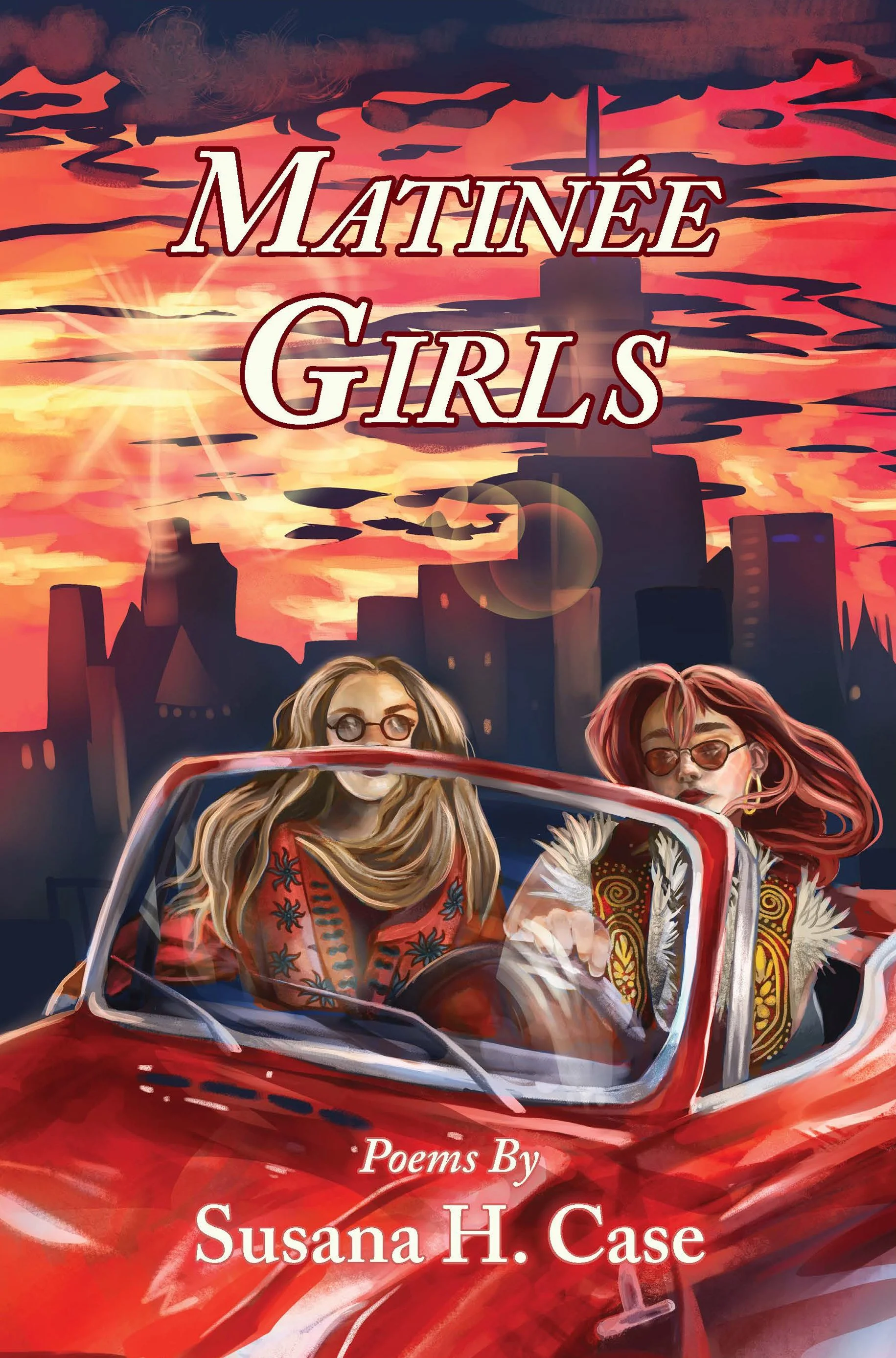
Publication Date: October 15, 2026
Paperback, 80 pages
ISBN: 978-1-966677-58-1
In Matinée Girls, a memoir brought to life by poet Susana H. Case, the reader is escorted through the poet’s 1960s girlhood, recounting her youthful adventures which spanned the globe from Ohio to Moscow, experiences filtered through her present observations as time has allowed each to influence the other.
Praise for Susana H. Case & Matinée Girls
With reinvented liner notes of the Beatles’ White Album peppered throughout razor-edged narrative poems laced with the underbelly of sixties’ headlines, I’m reminded that mastery of a craft comes from experience and that the most provocative works of art wrestle chaos into lyrics. I’m tempted to press Susana H. Case’s tenth collection on vinyl and play it backwards to hear what additional intensity lurks in these poems—as if I need any more. “Doesn’t confusion-coming-down-fast describe every love affair you’ve ever had?” Yes. Matinée Girls is rated ‘R’ for Revolutionary.
—Sandra Yannone, author of Boats for Women & The Glass Studio
Susana H. Case’s Matinée Girls is a transformative collection that will continue “pounding through us like a new heartbeat.” The work in this book sustains the reader as it journeys back in time when the Beatles and Buddy Holly echoed the tone of our nation’s struggles. The memories are a testament, an exquisite examination of womanhood and sexuality, a map to places where the “street swallows its secrets.” This collection will take the reader from the Adriatic Sea to a cracked adobe shack and then to sparkly heels on cobblestone. This work captures a time and place that is as indelible as the poems. Each turn of the page will remind you “there must be / someone somewhere singing.”
—Connie Post, author of Between Twilight & Prime Meridian
Whether addressing the Tate murders, ranting and giggling with a friend about pulling off and throwing out the window their jeans and panties while driving on an L.A. freeway, or philosophizing about the tracks of the Beatles’ White Album, Susana H. Case astutely observes the plight of women and girls in her latest book, Matinée Girls. Clever and witty, she illustrates her remarkable range of knowledge in this coming-of-age collection of entertaining and poignant poems.
—Margo Taft Stever, author of Bareback Rider & The End of Horses
The poems of Susana H. Case’s Matinée Girls reenact personal dramas, especially in the search for love, that play out in adolescent and young adult lives amidst the glamour and sensationalism of the sixties. Beneath the turbulent surfaces of these scenarios, we glimpse the emerging “defiant bones” of the poet’s self-assertion, and we learn with her that there are “sacrifices / to love not worth making.” Interspersed with the poems are interludes of reimagined liner notes for selections from the Beatles’ iconic 1968 White Album, notes that reflect with pathos and irony on the poet’s life.
—Carolyne Wright, author of Trajectories: Crossing the Map of Poetry & Masquerade: A Memoir in Poetry
About the Author
This is Susana H. Case’s tenth book of poetry and her fourth with Broadstone Books. She has won several Pinnacle Book Achievement Awards, an IPPY, a NYC Big Book Award Distinguished Favorite, and she was a finalist twice and an honorable mention for the Eric Hoffer Book Award, as well as a finalist for the American Book Fest Awards and the International Book Awards. The first of her five chapbooks, The Scottish Café (Slapering Hol Press), was rereleased in an English-Polish version, Kawiarnia Szkocka (Opole University Press), and an English-Ukrainian edition (Slapering Hol Press). Her work has also been translated into Spanish, Italian, and Portuguese. Case co-edited, with Margo Taft Stever, the anthology I Wanna Be Loved by You: Poems on Marilyn Monroe (Milk and Cake Press) and is co-editor with Margo Taft Stever and Sandra Yannone of Unsinkable: Poetry Inspired by the Titanic (Salmon Poetry). Currently, she is an editor at Slapering Hol Press. http://www.susanahcase.com/.
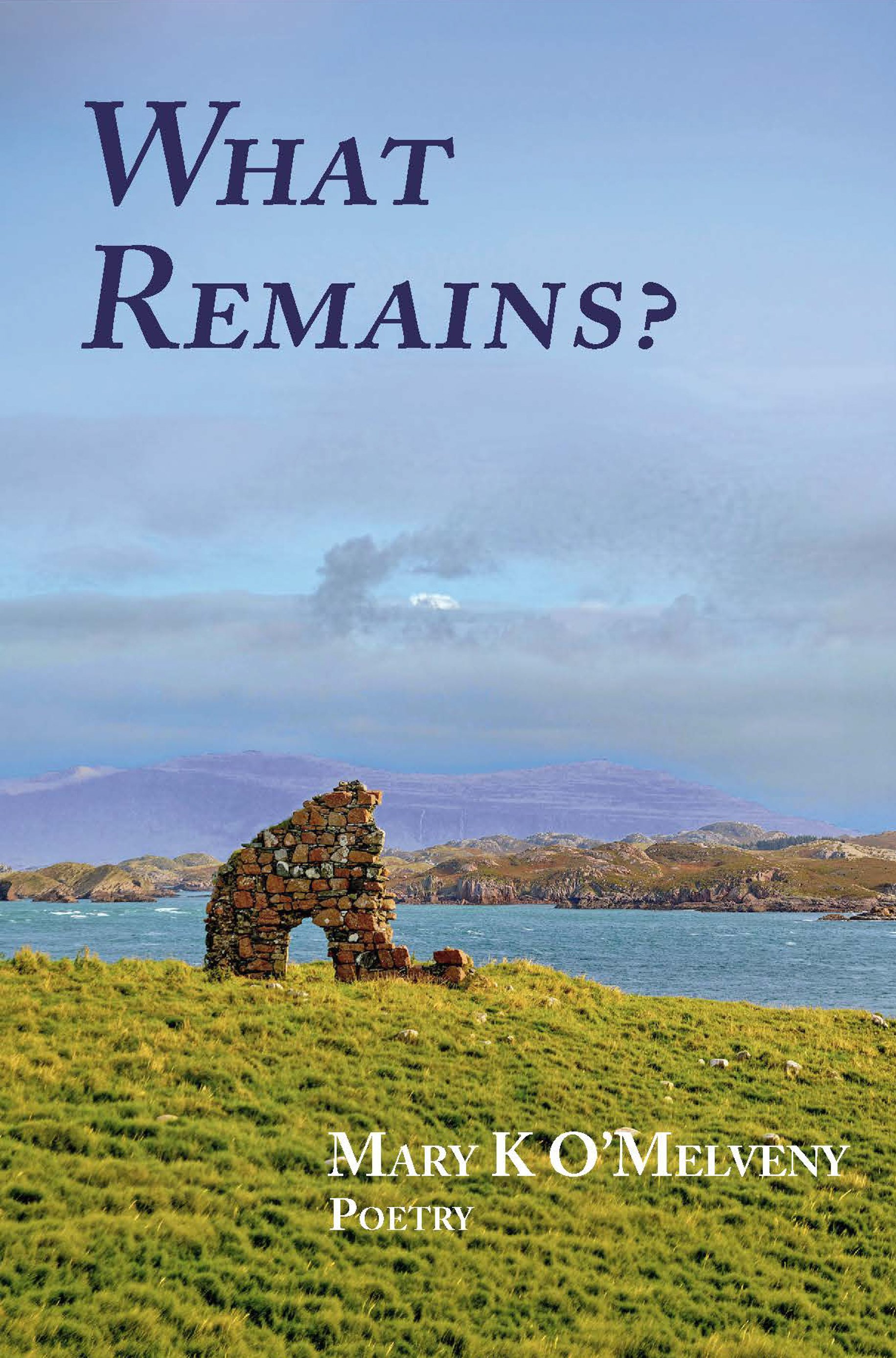
Publication Date: October 15, 2026
Paperback, 102 pages
ISBN: 978-1-966677-64-2
A collection of poetry ruminating on evolutionary stories of loss, survival, and perseverance, with a highlighted focus on explorative discoveries of the natural Earth, providing further musings on the strengths of humanity.
Praise for Mary K O’Melveney & What Remains?
Mary K. O’Melveny’s newest collection is beautiful and ambitious, sampling broadly from human experience around the globe and diving vertically into time in poems that evoke rich histories from her mother’s stories, her great-grandmother’s sampler, and further back, deeper down. Beyond the personal artifact, fascinating natural research offers anchor and refrain. These poems introduce us to radioactive wasp nests, the syntax of whale songs, and to jellyfish who mutate inexorably toward salvation.
—Dave Essinger, Professor of English, University of Findlay, author of This World and The Next
Why do we read poetry? To engage our senses, and to test our capacity for feeling. To experience the poet’s use of language that, when effective, promotes the potential for our own updated relationship with it. And to invite personal reflection on complex human and earthly experiences. In What Remains? Mary K O’Melveny provides readers an opportunity to interact with our mysterious, beauteous world through the lens of history, with a keen eye on the fragility of the planet and how respect for it – and for creatures depending on it, including our fellow humans – can lighten despair, build hope, and open windows to a healthy perspective. The experience of taking in the poems within this book is a wondrous and soulfully healing journey.
—Joe Maita, Editor/Publisher, Jerry Jazz Musician
Mary K O’Melveny’s new poetry volume, What Remains?, questions how we endure, find hope, in times of loss, grief, and crisis—personal, political, environmental, global. These poems offer illuminating and memorable visions of the decline of past civilizations, observations of the natural world, witnessing of present disasters—both environmental and global—and their impact, eschewing despair and reveling in natural phenomena, particularly the joys of birdsong, art, music, and moments of beauty and memory. With evocative, original, and startling imagery that also suggests profound philosophical exploration, she creates a poetic universe in which forms of loss are countered with the traces of all “that remains.” This is a volume that a reader will savor, return to for its complex visions and offers of spiritual sustenance.
—Jan Zlotnik Schmidt, author of Foraging for Light Over the Moon Gone: The Vanishing Act of Bess Houdini
About the Author
Mary K O’Melveny is the author of five poetry collections and a chapbook, including an album of poetry and music If You Want To Go To Heaven, Follow A Songbird (Jerry Jazz Musician 2024); Flight Patterns (Kelsay 2023) (nominated for the Eric Hoffer Book Award); Merging Star Hypotheses (Finishing Line 2020), semi-finalist, The Washington Prize/The Word Works). Rhina P. Espaillat, poet, essayist and short-story writer described Mary’s poetry in Dispatches From The Memory Care Museum (Kelsay 2021) as “nakedly genuine” …. of “consoling and enriching value.” Mary’s award-winning poems are widely published in print and on-line literary journals, anthologies and poetry blog sites. A three-time Pushcart Prize nominee, she is a member of the Hudson Valley Women’s Writing Group and co-authored the Group’s two published anthologies. A retired labor rights lawyer, Mary lives with her wife near Woodstock, New York, teaches writing classes and supports social justice causes.
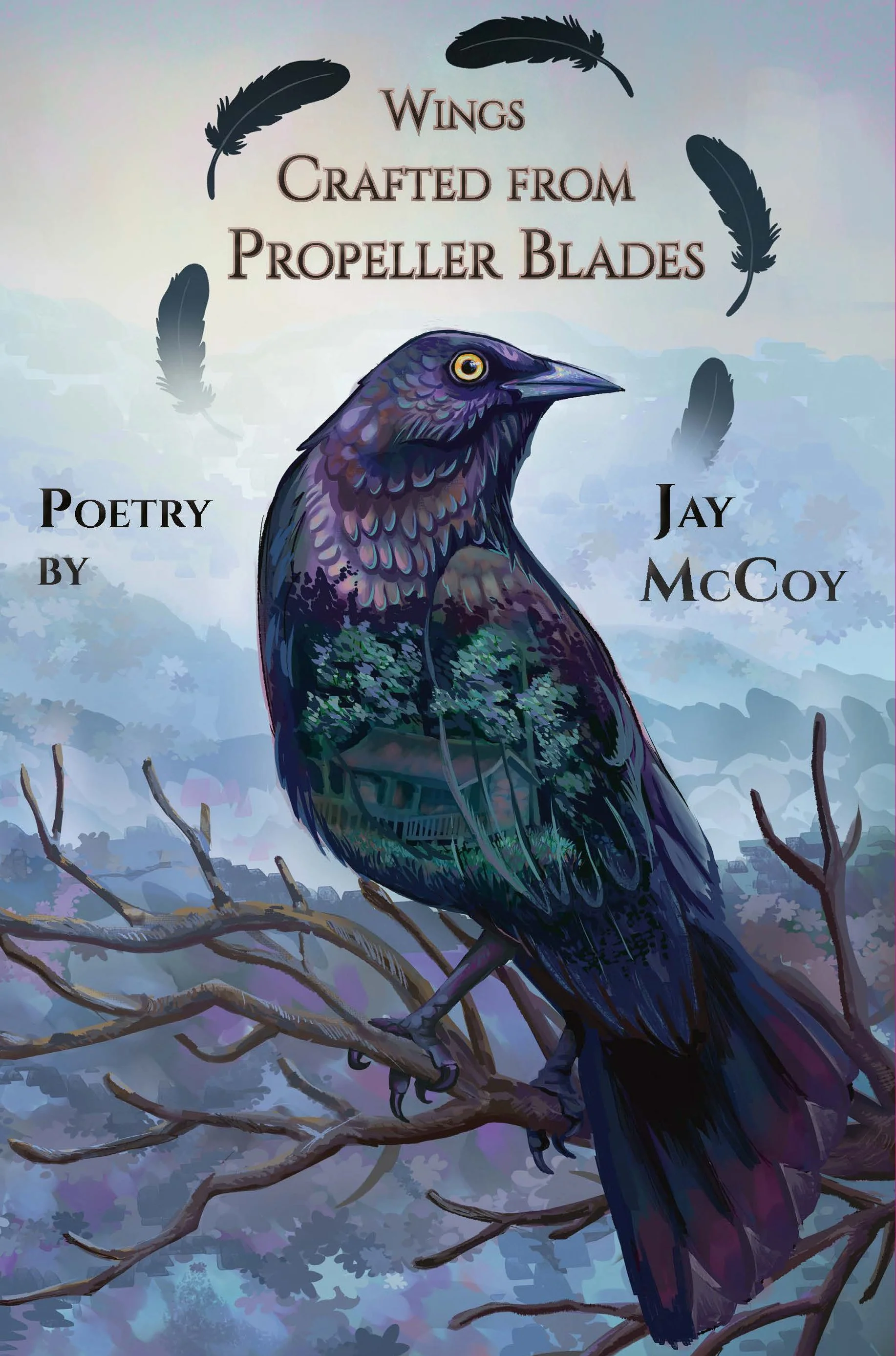
Publication Date: September 30, 2026
Paperback, 88 pages
ISBN: 978-1-966677-60-4
Wings Crafted from Propeller Blades transports us to Jay McCoy’s Appalachian roots. A school picture, tending his mother’s garden, or baking a pie, these poems show us that simple memories are often the strongest.
Praise for Jay McCoy & Wings Crafted from Propeller Blades
Jay McCoy’s new book of poems gathers all the family around— here’s Aunt Madge, Sissy, Geraldine, Walter, Lurlene and Dollie, and Mom and Dad in the long arc of their lives together. They welcome the rest of us to share a meal with them, the food mouth-watering and abundant, and no one is a stranger here any longer. Through these poems, they tell us of their love stories, their heartbreaks, and there is poetry in every detail from the names of the quilt patterns to the outfits worn to the fair. McCoy revels in deft poetic forms and interactions with the words of other poets, from Nikky Finney and Juan Felipe Herrera to Frank O’Hara and the eternally under-appreciated Jack Spicer, and finally Kentucky’s own Jim Wayne Miller. If you are feeling low, treat yourself and set aside some time to spend with Jay McCoy and Wings Crafted from Propeller Blades, and welcome to the family.
—Jesse Graves, author of Merciful Days & Said-Songs: Essays on Poetry and Place
Wings Crafted from Propeller Blades is an instruction manual for how to hold loss and still whirl with buoyant love. These poems sing with Appalachian storytelling, foodways, quilting, music, gardening, and more, inviting the land’s long memory itself to cast the spell we need against our grief. Jay McCoy is not only a true poet, he holds my highest esteem as a tradition bearer. May these miracle words draw us ever nearer to our land and people, forever alive.
—Rebecca Gayle Howell, recipient of the Aiken Taylor Award for Modern American Poetry
With the tender, elegiac voice of one left behind, the poems in Jay McCoy’s Wings Crafted from Propeller Blades navigate the enduring landscape of grief, reminding us that mourning is simply love that refuses to end. Whether finding the spirits of his departed parents in the birds at the feeder or honoring the dead through the quiet rituals of shared food, these poems are luminous and deeply felt. McCoy honors all those spirits who walk with us and watch over us. He invites us to sit with him for a while in that fragile, universally felt space where we are not yet okay but we trust that we will be someday.
—Denton Loving, author of Feller
This satisfying and honest book is about many things, chief of which is companionship. Kin and colorful characters and ancestors crop up as we would expect. But there are other companions here, too, from a cold creek to a dinner bell, from heirloom garden seed to the very names of quilt patterns. McCoy enumerates these other companions out of gratitude and rightly so. We cannot go through the world alone. Our companions help us through it and for some of us a worthy guide may be an empty jelly jar or a mess of greasy beans.
—Maurice Manning, author of Railsplitter & others
About the Author
Jay McCoy is a poet and visual artist with deep Appalachian roots in Eastern Kentucky. He is Director of the Kentucky Center for the Book and Director of Literary Arts Programs for Kentucky Humanities, and serves as an adjunct professor at Eastern Kentucky University and Bluegrass Community & Technical College teaching composition & rhetoric, creative writing, and Appalachian studies. Jay holds Bachelor of Arts degrees in English and Biology from Transylvania University, a Master of Arts in Education in Counseling Psychology and Higher Education Administration from The University of Akron, and a Master of Fine Arts in Creative Writing from the Bluegrass Writers Studio at Eastern Kentucky University. His writing has been published online and in print including Still: the Journal, Blue Fifth Review, Naugatuck River Review, The Heartland Review, and several anthologies, as well as his chapbook, The Occupation, published by Accents Publishing. He served as editor for the 2020 anthology of Lexington Poetry Month, Maps We Forgot to Bring. Wings Crafted from Propeller Blades is his first full-length collection.
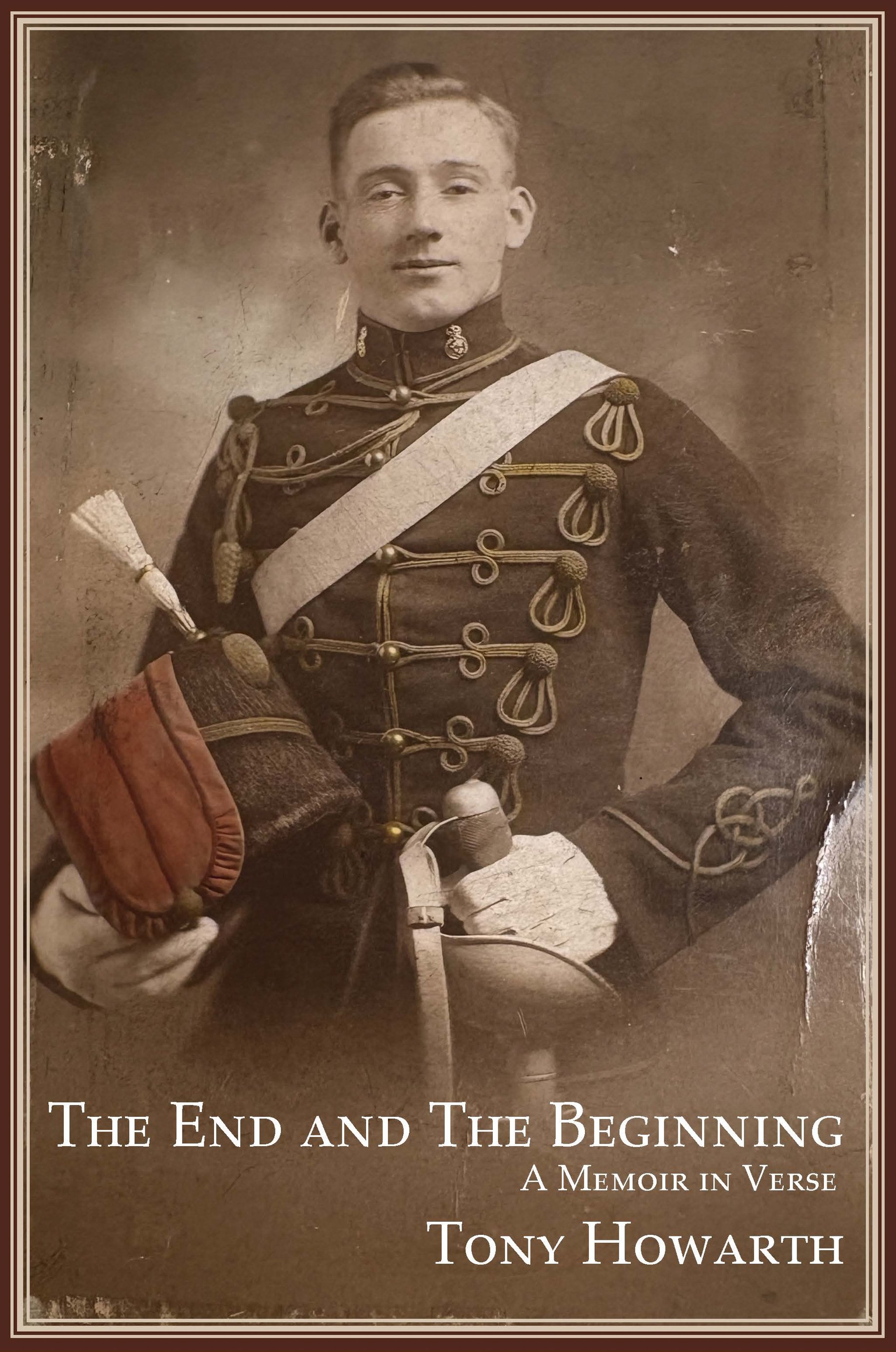
Publication Date: October 15, 2026
Paperback, 98 pages
ISBN: 978-1-966677-59-8
The End and The Beginning is autobiography in verse, beginning with Tony Howarth’s childhood in England (“six years old / I’m swept up by the crowd / everyone headed for Ravenscourt Park”). He recounts his boyhood war years (“I’m bundled on to train with Dad / evacuated from London / passed from auntie to uncle to auntie”) and an abrupt move to the States to join his mother (“a passport and ticket / on an aeroplane / to the United States”). There in postwar America, he forms deep friendships (“Win and me we’ve done a lot of talking / getting to know one another / ...I ask him...could we be room mates / he says sure”), and finds the love of his life (“I should buy a ring for Marna / my heart has made up its mind”). A stint in the army allows for a joyous and long-awaited reunion with his beloved father (“a tap on my shoulder / I turn with a huzza into his arms / so sharply that everything in our hands / scatters across the platform”), completing the circle of the title.
Praise for Tony Howarth & The End and The Beginning
What the poet called “the still, sad music of humanity” suffuses this thrumming ode on two timeless romances – between son and father, between lost youth and found love – with an aching beauty that will shimmer in the heart of every reader blessed to have taken a similar journey to selfhood.
—Jeremy Gerard, performing arts critic and biographer
Lovers of poetry and storytelling will be entranced by this sweeping story of a boy’s journey to manhood. Tony Howarth sets the reader down in England . . . in a time and place where war, family turmoil and deceit separate a young boy from the father he loves. Each narrative poem is like a snapshot as the boy struggles to make a place for himself wherever he lands. I was breathless at times as I followed the high-spirited boy’s determination to explore and endure whatever came along as he searched for the way to manhood, and to finding the father he was forced to leave behind.
—Sarah White, author of The Wanderlust: A South Carolina Folk Tale & others
Tony Howarth, known for his moving novels in verse, has written a triumphant contemporary
Odyssey—one that turns the narrative on its head and privileges the son's story and his poignant quest to rediscover his father. Throughout the book, we witness the ways that literature and love work to save the speaker as he bravely navigates the challenges of war, displacement, emigration, poverty, and familial lies. The End and The Beginning is a wonderful collection from a poet at the height of his powers.
—Jennifer Franklin, A Fire in Her Brain (Princeton University Press, 2027)
About the Author
Tony Howarth, a playwright, director, and former journalist, retired in 1991 after twenty-eight years as a teacher of English and theatre at Woodlands High School in Westchester County, New York. He began writing poetry in 2009 after a visit to William Wordsworth’s Dove Cottage, in England’s Lake District, developing his craft at the Hudson Valley Writing Center under the treasured guidance of Jennifer Franklin and Fred Marchant. His poems have appeared in many magazines, among them Chronogram, The Naugatuck River Review, Obsessed with Pipework (England), The Connecticut River Review, Raven’s Perch, The Sow’s Ear, and the Grayson Press anthology Forgotten Women. His verse dramas Wild Man of the Mountain and A Hand to Hold, and his memoirs in verse, The Griefs That Fate Assigns and After the Storm, A Shaft of Sunlight were published by Broadstone Books.
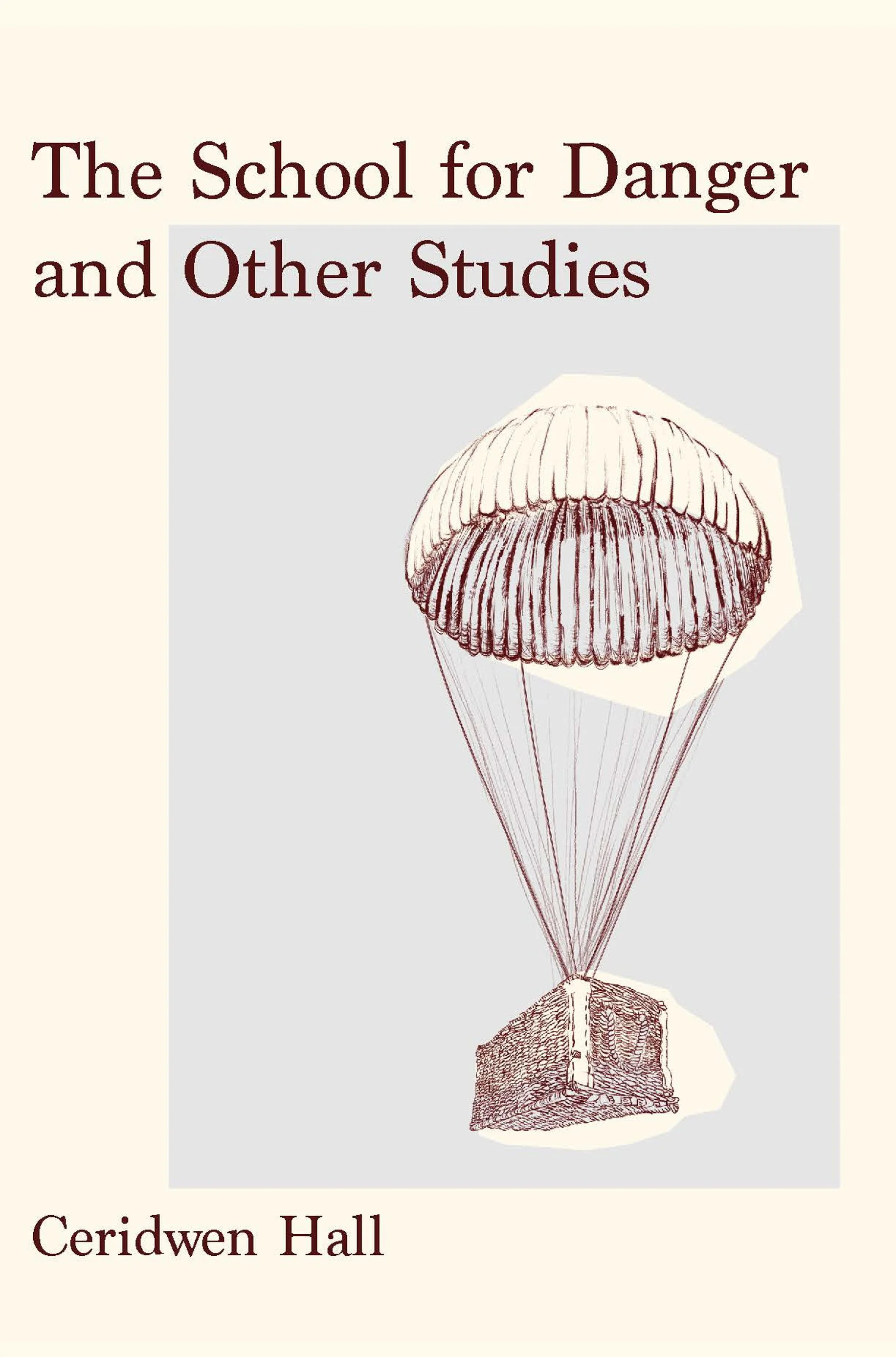
Publication Date: September 15, 2026
Paperback, 92 pages
ISBN: 978-1-966677-56-7
In The School for Danger and Other Studies Ceridwen Hall explores her life as both student and teacher, in poems revealing that the former does not end simply because the other is achieved. Interspersed and interacting with these poems are others exploring her fascination with spies of World War II and the paintings of Claude Monet. Her work inspires the reader to examine their own school days while meandering the paths of art, history, and nature.
About the Author
Ceridwen Hall is a poet, educator, and writing coach. She completed her MFA at the University of Illinois, Urbana-Champaign, and her PhD at the University of Utah, where she received the Clarence Snow Fellowship and the Levis Prize in Poetry. She is the author of Acoustic Shadows and three chapbooks. Her work has appeared in TriQuarterly, Pembroke Magazine, Mississippi Review, Craft, Poet Lore, and other journals. Find her at www.ceridwenhall.com.
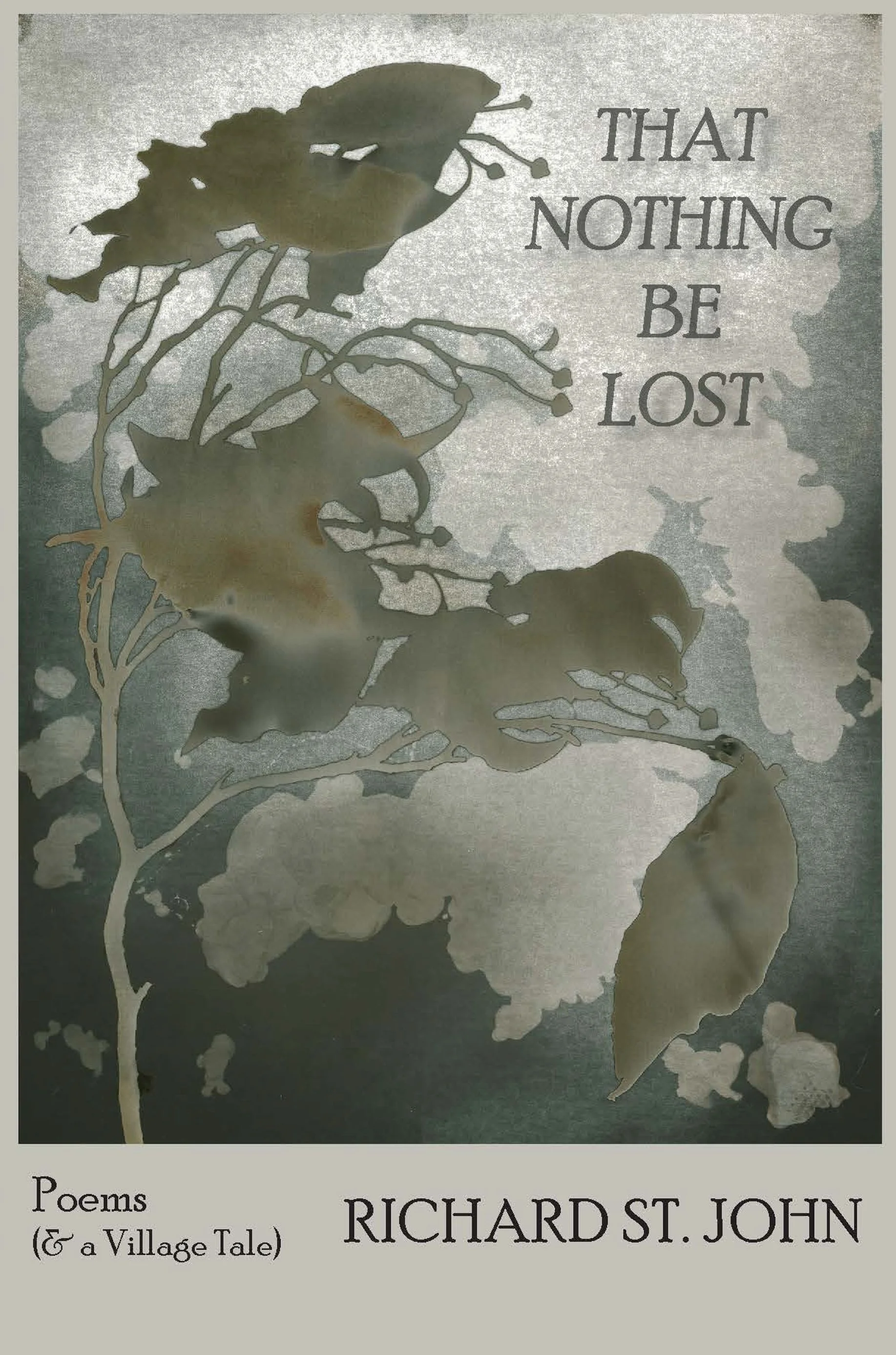
Publication Date: October 15, 2026
Paperback, 84 pages
ISBN: 978-1-966677-61-1
Richard St. John’s latest collection That Nothing be Lost takes the reader on an autobiographical journey seen through his deep and sometimes tragic friendships. These poems coupled with the author's childhood memories combine to make this work poignant and heartfelt. Included among the poems is a short story reminding us of the importance of community.
That Nothing Be Lost is a book of sacred witness: to our wounded companions, our personal histories and the shared challenges that shape our lives. What can we hold in our hearts amidst the transience of all things? What might shed light as we bravely make our way?
Praise for Richard St. John & That Nothing Be Lost
This is an astounding piece of literary work. Each poem feels like a warm personal embrace, yet as a collection they become our collective memory. These poems’ power is matched only by the poet’s dexterity and deep humanity.
— Sony Ton-Aime, Executive Director, Pittsburgh Arts & Lectures & author of Konbit.
These exquisitely observed poems are acts of deep human sympathy that seek to both break the heart and heal it. Richard St. John engages our historical moment with the rhythms and warm humanity of writers from Christopher Smart to the Psalmist to Aeschylus, reminding us of the long tradition of human empathy.
— Kim Garcia, author of DRONE & The Brighter House
St. John’s latest collection sees recollection and witness as poetic practices, as “a sacrament for us.” That Nothing Be Lost aims to do what its title commands—to marry memory of daily existence with the eternal. These poems confront the difficulty of this practice in the face of loss in its many forms. Yet even for the child who lives a single day, life is something cherished: “In the beginning: darkness, / heartbeat, blood. And it was good.”
— Jake Grefenstette, President, International Poetry Forum & Editor, Carnegie Mellon University Press Poetry Series
About the Author
Richard St. John is also the author of Book of Entangled Souls (Broadstone Books, 2022), Each Perfected Name (Truman State University Press, 2015), The Pure Inconstancy of Grace (published in 2005 by Truman State University Press, as first runner-up for the T. S. Eliot Prize for Poetry) and Shrine (a long poem released as a chapbook in 2011). He enjoys connecting with readers and listeners in university and literary settings and, especially, with people who might be newer to poetry in congregations, online book groups, community spaces and welcoming homes.
St. John received degrees in English from Princeton University (B.A.) and the University of Virginia (M.A.) In 2002, he completed a mid-career Loeb Fellowship for independent study at Harvard University. A portion of his literary materials have been archived in the University of Pittsburgh library system. He has worked professionally in the areas of community development, nonprofit management, and reflective conversation. He lives in Pittsburgh, Pennsylvania, with his wife, Kate. For more information, please visit his website: http://richardstjohnpoet.com
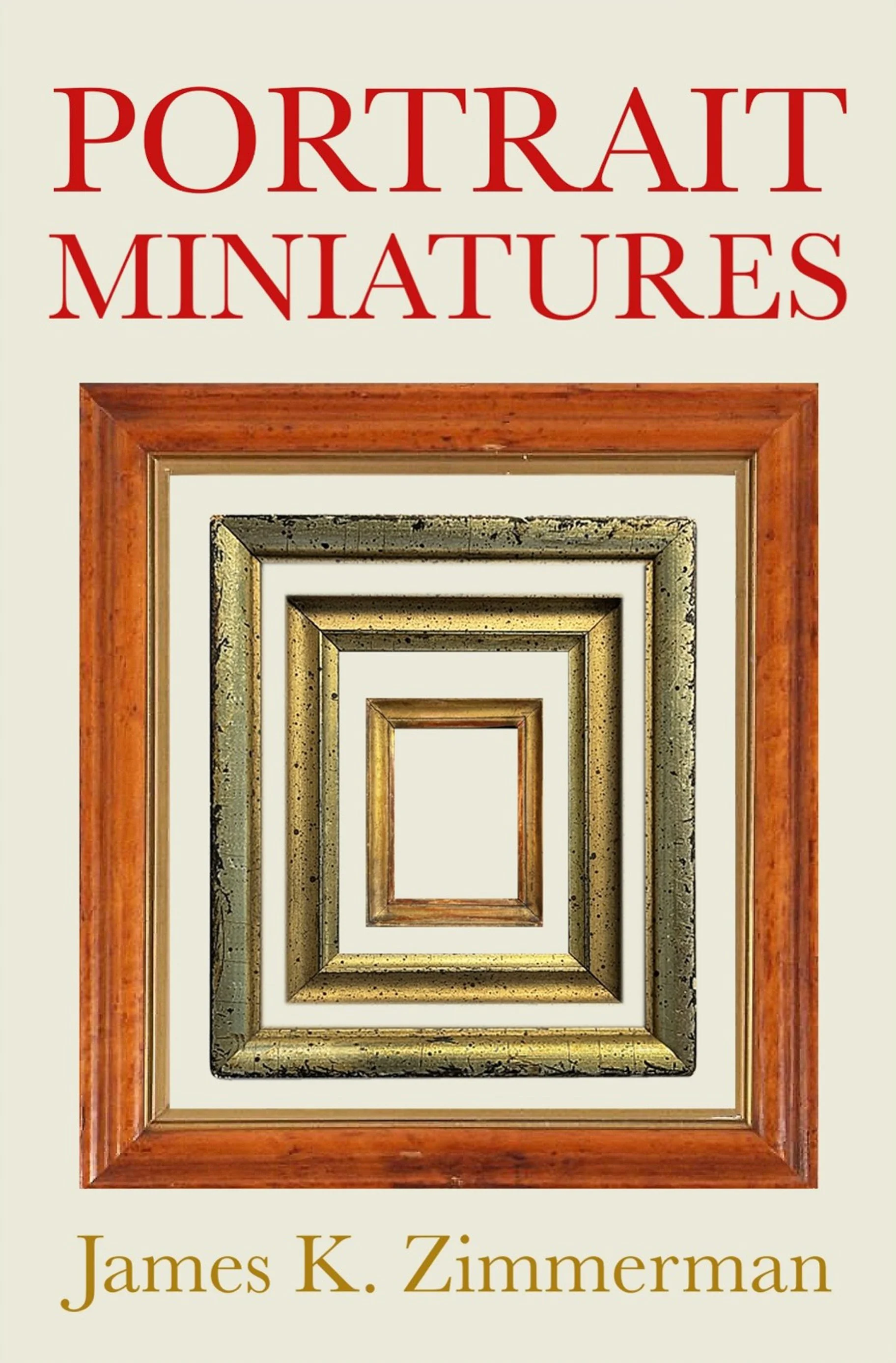
Publication Date: September 15, 2026
Paperback, 108 pages
ISBN: 978-1-966677-57-4
Portrait Miniatures, the new collection of poems by James K. Zimmerman, lives up to its title, creating word portraits of a diverse cast of characters ranging from Tina, at home in her land of mushrooms and cows, to Flaco, the eagle owl of Central Park. These portrait poems, visual in their descriptions, reveal the poet’s keen observation of subjects both human and non.
Praise for James K. Zimmerman & Portrait Miniatures
“In each person,” Auguste Rodin argued, “…there is life, the most essential ingredient for art. And so in each person there is the potential for a masterpiece.” My bet is James K. Zimmerman would agree with the great sculptor, for in his latest poetry collection – Portrait Miniatures – we find a remarkable wellspring of generosity and attention for the individual. From Eve after Eden to Cyndi Sue selling blueberries in Maine to Salman Rushdie strolling cobblestone streets alone and without security to grieving partners and wayward souls, Zimmerman’s admirable range and felicity with language make plain the vast potential for beauty in us all.
—Jared Harél, author of Let Our Bodies Change the Subject
Perhaps in another life along the slalom of multiverses, poet James K. Zimmerman was a docent in an art gallery. It would certainly appear so, given the detailed portraits and fine sketches he walks us through in his latest, Portrait Miniatures. Zimmerman populates his thriving exhibition with a cast that touches you “not with rasping lace / but with the talons of … sadness,” or places you in a room where “the walls speak / in the dialect of powdered plaster.” Zimmerman understands inherently, intuits naturally, that the beauty of any art is that it lives both in the moment and beyond it as well. Portrait Miniatures paints its characters in humor, dreams, tragedy, and transcendence. This collection is vibrantly alive.
—Mike Jurkovic, author of Circling Planes
Time is the great leveler in this tender portrait folio, laying a weatherbeaten Maine blueberry seller and an ape-boy to rest side by side with Icarus, Robert Bly, and the girl who broke Sappho’s heart. Tattooed mythic symbols fade like stale memes—yet an all-too-brief existence may birth an enduring legend, like Flaco the Central Park Zoo Owl. Whose life can be folded into a single page that floats away on the wind? Everyone—the man so “successful” that mundanities blind him to star-fire, and the man whose imagination soars with death-defying aviators while he hides the shame of unemployment from his children. But if each life is equally transient, each is also equally holy in this poet’s eyes. Zimmerman calls to mind a phrase from Thomas Gray's mock-obituary for himself in “Elegy Written in a Country Churchyard”: “Large was his bounty, and his soul sincere.”
—Jendi Reiter, editor of Winning Writers, author of Origin Story
James K. Zimmerman’s work rings out through space with spectacular sincerity. With perspective playing a critical role in all of his work, the persona poem is his muse within this collection. Each piece seeks to examine the lessons derived from diverse lived experiences without relinquishing the fundamental elements of the human condition: humor and tragedy. Zimmerman craftily creates space for quietness within pivotal moments – “I live in a dream of flying / with ravens to a yolk- / and-lemon moon, riding / on a cloak of midnight” – while also embracing intensity and emotional excess in others – “my hand / on the halting sigh / of your chest / the crumpled arms / of your pain / the seisms / of your fear.” Portrait Miniatures reveals how unexpected vulnerability shapes the ever-shifting contours of our lived experiences.
—Kristine Esser Slentz, author of Carnations & Car Crashes
About the Author
James K. Zimmerman’s poetry appears in Chicago Quarterly Review, Folio, Lumina, minnesota review, Nimrod, Pleiades, Rattle, Reed, Salmagundi, and numerous other journals and anthologies. A frequent Pushcart Prize nominee, his writing has won many awards, including the Edwin Markham, E.E. Cummings, Vern Cowles, Pat Schneider, and Hart Crane Prizes. Author of five books of poetry – most recently The Further Adventures of Zen Patriarch Dōgen, Uncertainty, and Unbroken Circle, Unending Thread – his poetry is featured on websites such as The Poetry Foundation and American Life in Poetry. He values his neurodivergence as an essential wellspring of his creative process.
Looking for something?
Explore our curated collection of poetry publications (and a hand full of “other” publication types) by searching the author name or book title below.